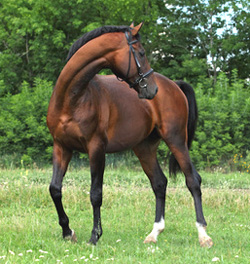
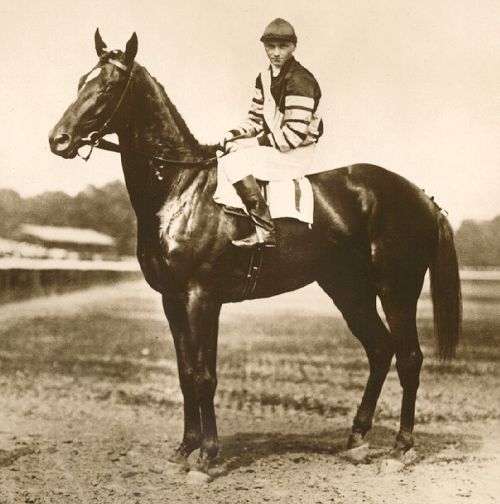
Will thoroughbreds have a future?

Will thoroughbreds have a future?
Showing posts with label thoroughbred. Show all posts

Tuesday, May 15, 2018

The World's Greatest Horse Racing System: Is it a Scam?

Currier & Ives, "A Brush for the Lead", 1866

All horse racing betting systems are scams in the sense that there is no sure way to pick a winner. If there was a foolproof way to pick winners of horse races, there would be a lot more people rich from gambling. There are just too many factors that can go spectacularly wrong in a race, such as a horse breaking down, a saddle slipping (like what happened to Affirmed) or a sudden thunderstorm, for any tipster or betting system to guarantee winners -- even those that call themselves "The World's Greatest Horse Racing System" or words of that nature.

Can You Learn How to Bet Cheaply?

If you want to learn about how to bet conservatively then check out books about betting harness races, quarter horse races or thoroughbred racing from your local library. They recommend only betting occasionally and as a hobby, not as a career. "Only bet what I can afford to lose" should be your mantra.

If you can earn enough money to cover your bets, then you are doing better than most. However, many people (like myself) just cannot keep to their betting limits, so I cannot bet at all. (Jut one of my many problems.)

Alternatives to Horse Race Betting

If you are worried about how the horses are treated during and after their racing careers and can keep to your betting limits, then try betting on another sport. Some casinos or betting parlors offer horse racing simulation betting games. I played one day on one of these when I lived in England. They were cute, but for me they did not hole the thrill and challenge of picking winners in races consisting of real horses. 

There is a popular (and very funny) video game called the Japan World Cup (and it's sequels, Japan World Cup 2 and Japan World Cup 3). I've never played it because I'm not into video games (and can't afford them anyway) but if you want to try your chances at pretend betting, go for it.

Monday, February 13, 2017

Life of a Thoroughbred Racehorse: Before Training at the Track

Thoroughbred foals destined for the track are first trained by their dams and then move on to weaning and turning one year old.

Long before a young Thoroughbred goes to a professional racehorse trainer, he begins learning the life of a racehorse.  His first trainer is his mother or dam.  Watching interactions between his dam and people help to familiarize him with people and learn that they should be obeyed.  Grooms and veterinarians teach him about being handled, about wearing a horse collar, walking on a lead and about receiving medications.

Many stud farms practice imprint training, where they hug and stroke the foal immediately after it is born.  A tiny horse collar may be placed on to get the foal used to wearing one.  This gets foals used to the smells and sensations of being handled by people and help to reduce stress whenever the future racehorse needs to be shod, groomed or tacked up.

Weanlings

The first big milestone a racehorse faces is being weaned from his mother.  Ever since he was two months old, he has been increasingly eating more solid food.  He is almost always in the company of his mother.  But by the time he is six months old, he and his mother are permanently separated.  

Weanlings are often placed two to a stall or pasture in order for them to get over the shock of losing their constant companions, their dams.  Depending on how large the breeding farm is or how mild the weather is, weanlings may be turned out all in one pasture for them to kick up their heels and play, morning and evening.  The company of others help the weanlings become confident in their new lives away from their dams.

Playing is important for foals and weanlings.  Not only does it keep the young horse out of mischief, but also helps develop muscles, bones and agility.  Good grooms begin to note the personalities of weanlings and report them to prospective owners or racehorse trainers.

Yearlings

All Thoroughbred weanlings are considered one year old or yearlings on New Year’s Day, despite what date the weanling were born on.  This is to help keep race records in order so that a horse does not compete with three year olds one day and then suddenly switches to four year olds the next.

By this time, a yearling will be taught some basic ground manners such as standing quietly in cross-ties.  If the yearling is being sent to auction, then the yearling will be taught to stand still and raise his head up with his ears forward in order to best show off to prospective buyers.  The yearling will be taught how to walk into and out of a lorry or horse van.  The yearling will also need their first racing shoes.  Since they are much lighter than ordinary horse shoes, he will need shoeing frequently.  Many yearlings also wear a saddle and bridle for the first time.  Many trainers also give the yearling lunging lessons, especially in Europe, weeks before the horse carries his first rider.  These basic lessons will impact a racehorse for the rest of his life. 

References

“Strategies for Weaning.” Cynthia McFarland. Thoroughbred Times. http://www.thoroughbredtimes.com/farm-management/farm-management-06-28-08.aspx

Horenstein, Henry and Carol Flake. Thoroughbred Kingdoms: Breeding Farms of the American Rcehorse.  Bullfinch Press; 1990.

Burch, Preston M. Training Thoroughbred Horses. The Russell Meerdink Company Ltd.; 1992.

Miller, Robert, DVM. Imprint Training of the Newborn Foal.  Western Horseman; 2003.


Thursday, February 9, 2017

Health Concerns in Thoroughbred Race Horses

Many racehorses suffer many health problems as a direct result of their breeding, in their training and during their racing careers. 

The thoroughbred racing industry is concerned with making money and not with preserving the health of the equine athletes.  Thoroughbreds are considered disposable since there are so many available for sale to replace injured, sick or dead horses.  Racehorses suffer many health problems as a direct result of their breeding, in their training and during their racing careers. 

Breeding Problems

Thoroughbred horses are bred to do one thing run. They are not bred to survive just run. All Thoroughbred descend from just three stallions, The Bryerly Turk, The Godolphin Arabian and the Darley Arabian. It is thought that 90% of all Thoroughbreds alive today trace their ancestry back to the Darley Arabian through once stallion named Eclipse. All of these foundation horses lived in the very late 1600s and early 1700s.

Since then, the gene pool has condensed even further. It is thought that about 90% of all Thoroughbred horses alive today trace their ancestry to Northern Dancer, who was born in 1961.  This intense inbreeding has produced a fast animal, but one that easily shatters. Although there was an intense public reaction to 2006 Kentucky Derby winner Barbaro's death from a racing injury, thousands of racing thoroughbreds die in America every year with no tears or media coverage.  

Training Problems

A thoroughbred's bone structure is physically mature when the horse reaches five years of age. However, when the bones are still soft, the thoroughbred race horse is broken to saddle and begun heavy training when they are yearlings. As soon as the knees close, they are ridden, whether the rest of their body can handle it or not.  Horses are often given drugs such as steroids to build muscle and powerful painkillers to make them run when they are in pain.

In order to toughen up young thoroughbred race horse's legs, they are either pinfired or chemically burned. Pinfiring is exactly what it sounds like. Even though The Thoroughbred Times declared pinfiring "obsolete" in 2006, the practice is still common.  In 1989, Sports Illustrated very casually mentioned "blistering" (chemically burning) in an expose on champions Easy Goer and Sunday Silence.

Racing Problems

During a race, a thoroughbred runs all out for a couple of minutes on hard surfaces carrying an adult rider and any lead assigned to carry, whipped, spurred, crowded, then shut up in a stall to go traveling to do the whole thing over again, sometimes as often as twice a week.

Small jockeys are getting harder and harder to find as worldwide nutrition improves. So, they are getting heavier while the horses get weaker. Today's thoroughbred race horse has no chance of living a long, healthy life. They are thwarted every chance through irresponsible breeding, careless disregard of a natural horse's anatomical requirements and no thought as to tomorrow. No wonder they self-destruct so often.  Those that survive racing are often too damaged to ever work again. Very few people are willing to have a horse that cannot work.  For example, the 1986 Kentucky Derby winner Ferdinand was sent to slaughter when he failed to sire enough winners.

Image of Northern Dancer statue at Woodbine Racetrack by JDG for Wikimedia Commons


Famous Racehorse Profile: Phar Lap

Known as the Red Terror

As America had Man o’ War and England had Red Rum, so Australia had Phar Lap, its most famous racehorse.  A 17 hand red chestnut gelding, Phar Lap won 37 or 51 starts, including Australia’s most prestigious race, the Melbourne Cup.  He was set to conquer the North American turf in 1932 after winning the Aqua Caliente Stakes in Mexico when he suddenly died due to mysterious circumstances, but could have been from poisoning.

Phar Lap’s obscure beginnings, rise to fame and tragic death at the age of 5 was the subject of a blockbuster film, Phar Lap (1983.)  His unusually large heart, weighing 14 pounds (6.35 kilograms), may have been one reason why he became a champion.  It was originally donated to the University of Sydney and then had a home in the Australian Institute of Anatomy.  It can now be seen in the National Museum of Australia’s Landmarks Gallery.

Humble Beginnings

Phar Lap was foaled in New Zealand on October 4, 1926, the son of Australian Leading Sire, Night Raid.  He was a gawky, uncoordinated, ugly-looking yearling with warts when he went up for auction.  Australian trainer Harry Telford admired Phar Lap’s pedigree, even though most of the horse’s half-brothers and sisters were doing poorly at the track.  He talked his boss, American businessman David J. Davies into buying the yearling for the very low price of 160 guineas.

When Davis saw Phar Lap, he wanted nothing to do with the horse and sold part-ownership to Telford.  In addition, Davis did not have to pay any training fees for Phar Lap.  The yearling was soon gelded and did very poorly his first year on the track, winning only one race.  It looked as if Phar Lap was a dud.

The Champion

Phar Lap had a much better three-year-old season and buy the time he was four he was on his way to becoming a legend.  In 1930, he won four races in four consecutive days, including the Melbourne Cup, where he went off as the favorite.  He won the race despite carrying a very heavy 138 pounds (9 stone 12 lbs.)  From September 13, 1930 to March 4, 1931, he won 14 races in a row.  This feat was not matched in Australia until 2011, when the spectacular mare Black Caviar brokeit.

Phar Lap won many of his races with a sudden come from behind move, even when he broke slowly and pushed to the extreme outside.


Tuesday, January 31, 2017

A Short History of the Triple Crown

NOTE: This little article was first published on the late lamented website Helium.com in 2013. Imagine my surprise when 2015 rolled around and American Pharoah did the seemingly impossible to be Triple Crown winner #12.

The American Triple Crown in thoroughbred flat racing is based on the English Triple Crown, as most elements of American horse racing are based on English horse racing.  The English Triple Crown consists of the 2,000 Guineas run on the first Saturday of May at Newmarket, the Epsom Derby at Epsom Downs in early June and the St. Leger Stakes at Doncaster Racecourse which is run in the summer.

Both Triple Crowns are restricted for three-year-old colts and fillies.  For many years, geldings were restricted from some of the races but have been allowed in recent years.  This age restriction makes the Triple Crown so hard to win.  Thoroughbreds do not mature until they are five years old so they are the human equivalent of teenagers when they run in Triple Crown races.

Enter Bryan Field

Bryan Field was a prominent turf writer for The New YorkTimes in the early 1900s.  In the 1920s, he proposed that America should have a Triple Crown similar to the English Triple Crown.  He suggested that the three best candidates for the race be the Kentucky Derby in Louisville, the Preakness Stakes in Baltimore and the Belmont Stakes in New York.

His idea caught on.  By the 1930s, the idea was established so firmly that a special trophy was commissioned for past and future winners of the Triple Crown.  Because the idea of an American Triple Crown was not established before the 1930s, thoroughbred superstars like Man o’ War were never entered in one of the three races.  Man o’ War, for example, never ran in the Kentucky Derby.

Only 12 Winners

The main difference in the American Triple Crown than the English version is that a horse has to win three grueling races in just five weeks.  In England they have at least seven weeks, depending on when races were scheduled.  As a result, there have only been 11 winners of the American Triple Crown.  They are:

  • ·         Sir Barton in 1919
  • ·         Gallant Fox 1930
  • ·         Omaha, son of Gallant Fox, in 1935
  • ·         War Admiral, son of Man o’ War, in 1937
  • ·         Whirlaway in 1941
  • ·         Count Fleet in 1943
  • ·         Assault in 1946
  • ·         Citation in 1948
  • ·         Secretariat in 1973
  • ·         Seattle Slew in 1977
  • ·         Affirmed in 1978

And, oh yeah -- in 2015 American Pharoah came out nowhere to sweep the Triple Crown and a newfangled race called the Breeder's Cup Classic.


There have been many speculations as to why so few have won the Triple Crown, as opposed to 13 winners for the English version.  The main theories are that it is just too much to ask for a three-year-old thoroughbred; the rise of international travel which makes more thoroughbreds able to compete in the races and the deterioration of the thoroughbred’s overall health as a breed.

Image of the Triple Crown trophy from Wikimedia Commons.


Life of a Racehorse: Retraining after Retirement

If the racehorse has survived a racing career....

To train a racehorse is a complicated process.  Horses cannot experience a sudden change of diet and exercise without risk of potentially lethal colic.  Therefore, Thoroughbreds destined for retirement and a new life outside of the racetrack need their diets and exercise levels gradually tapered off before they can go into retraining.

Thoroughbreds live an average of 30 years but usually are retired from flat racing when they are just five and from jumps racing when they are teenagers.  Only champion mares and stallions head for a new life in the breeding shed.  But the majority of racehorses are geldings or neutered males.  Although they cannot breed, their calmer temperaments make them excellent candidates for retraining for pleasure riding or driving in harness.

Challenges Ahead

It is a popular misconception that all racehorses are retired due to untreatable injuries.  Although injuries may occur to prompt a racehorse trainer’s decision to retire a horse, not all retired racehorses are lame or sick.  Some are retired just because the horses are too slow for competitive racing.  Some have treatable illnesses.  Within a year, they can be sound and ready for their new careers.

It is also a popular misconception thatThoroughbreds are crazy.  The high-energy diets that racers need leads to high-energy horses.  This is why a retired Thoroughbred needs to gradually have his grain rations reduced so he is not so full of excess energy.  Thoroughbreds are intelligent creatures that are curious about their surroundings and love food.  They are willing to learn new things if given a small food reward like a chunk of carrot.

What Retired Racehorses Can Do

Racehorses need to unlearn some habits that the track taught them.  Training a racehorse to be a calm pleasure mount means training the horse as if he never has been ridden before.  Many racehorses equate the weight of a rider with running as fast as possible.  But gradually the horse will learn to wait for a rider’s cues before walking, trotting or running.

Once a retired racehorse learns the basics of responding to bridle commands on a lunge line and walking under a rider without breaking out into a gallop, then he is ready for just about anything his new career demands.  Ex-racehorses can be found doing tricks for the movies, carrying police officers for crowd control and given riding lessons to the physically and mentally challenged.  But the majority will go on to be pleasure mounts and compete in sporting events like hunting and dressage.

Conclusion

The end of a racing career does not mean the end of a racehorse’s life.  Retired racehorses are suitable for a wide variety of future careers.  Training a racehorse for a new life is first started by a racehorse trainer and then to trainers and volunteers in horse rescue organizations.  There are many sound and sensible ex-racehorses ready for adoption.

Recommended Reading

  • ·         Beyond the Track: Retraining the Thoroughbred from Racehorse to Riding Horse. Anna Ford and Amber Heintzberger.  Trafalger Square Books; 2008.
  • ·         HorseChannel. “Starting with Off-the-Track Thoroughbreds.”  Cindy Hale.  September 2007. 
  • ·         Steuart Pitman.  “Retraining Thoroughbreds for Dressage.”  Dressage Today. January, 2013.


Why Didn’t Man o’ War Run in the Kentucky Derby?

Man o’ War (1917 – 1947) is widely considered to be the best thoroughbred racehorse bred in America.  He would be voted the “Horse of the Century” by the venerable racing magazine, The Blood-Horse.  He won two-thirds of the American Triple Crown -- the Preakness and the Belmont Stakes.  But he never ran in the Kentucky Derby.  Why?

“The mostest hoss that ever was.”  This was how stud groom Will Harbut described Man o’ War (1917 – 1974.)  History would agree with Harbut.  The Blood-Horse would list Man o’ War as “The Horse of the Century.”  In his career, “Big Red” won 20 of 21 races and broke eight speed records.  He drew huge throngs of admirers to the tracks.  Many horse owners would not race their horses against him.  Visiting him in retirement was considered a pilgrimage by racing fans.  He would sire the Triple Crown champion War Admiral.

Yet America’s best racehorse never ran in America’s most famous race – the Kentucky Derby.  This was not due to injury.  Man o’ War’s first start at the age of three was in the Preakness Stakes.  Man o’ war’s owner, Samuel Riddle, purposefully kept his champion out of the Kentucky Derby (open only to three-year-olds.)  Why wasn’t he entered?

Scheduling

In 1920, the year Man o’ War was three, the Kentucky Derby was scheduled a mere eight days before the Preakness Stakes.  Back in 1920, racing twice a week was normal for most race horses.  Riddle would also campaign his horses this hard.  As a two-year-old, Man o’ War often had mere days to rest in between races.

But Riddle clearly thought that the Preakness and Belmont were far more prestigious races.  He wanted the pleasure of watching his champion colt trounce his competition close to his homes in Saratoga, New York and Glen Riddle, Pennsylvania.  There were no commercial airplane flights back in 1920.  You drove or took the train to get from one state to another.

Red’s Actual Age

Man o’ War actually turned three on March 29, 1920.  Due to the laws of Thoroughbred racing, all Thoroughbreds have an official birthday of January 1.  The argument was that this made it easier on the sport and made it easier for eligibility in age-restricted races.  In this way, the betting public would always know how old a horse was. 

Horses are not physically mature until they are five.  However, racing tradition demands that immature thoroughbreds begin running and making money for their owners as soon as they can carry a rider.  Riddle believed that Man o’ War was too young to run the Kentucky Derby distance of 1 ¼ miles.  The Preakness was shorter at 1 1/8 miles.

What Triple Crown?

In modern times, winning the Triple Crown is the Holy Grail of American turf racing.  But there was no Triple Crown back in 1920.  The term was not coined until the 1930s, when sports writer Bryan Field suggested strongly that America needed to have their own version of England’s Triple Crown. 

Man o’ War did not compete for the Triple Crown in 1920 because there simply was no Triple Crown then.  The Kentucky Derby was not seen as prestigious to race horse owners of the Northeast because it was a Southern race.

References
  • Man o’ War: A Legend Like Lightning.  Dorothy Ours.  St. Martin’s Press; 2006.
  • Man o’ War.  Page Cooper and Roger Treat.  Westholme Publishing 2004 (originally released in 1950.)
  • Portraits of Kentucky Derby Winners: A 120-Year History.  Beverly Bryant.  HCI; 1995.

Sunday, January 29, 2017

If I Won the Lottery: Open a Racehorse Retirement Rescue

If I won the lottery, I wouldn’t stay in the crowded horseless suburbs I live in.  I’d move out to the country, buy one of the many farms going into bankruptcy and turn it into a racehorse retirement home.  I may stay in my home state or move to another state, depending on how much I won and how close good vet care would be.

Taking proper care of horses is expensive.  They need good food, hay, pasture to roam, a warm stable and quality vet care, including a yearly dental check-up.  They also need companionship.  It would drain all of my winnings, even if I won several million dollars.  If I could only save one horse, it would be worth spending all my lottery winnings on.

Why Race Horses?

I used to love horse racing.  All anyone needed to do was shout out a year and I’d tell them what horse won the Kentucky Derby that year and who rode the horse.  Once, when I was homeless in England, I wound up winning big when a 33-1 longshot named Red Marauder won the prestigious Grand National. (Pictured above.)  

But now I have a love-hate relationship with racing.  I hate the inbreeding, the drug use, the complete disregard for the fragility of young horses and especially the way horses are discarded when they can no longer race.  Horses live to an average of 30 years, but ex-racers are dumped like garbage.  Even 1986 Kentucky Derby winner Ferdinand was sent to a slaughterhouse.

I love the horses, though.  I love their courage, their beauty, their obedience even when they are being run to death.  None of those horses deserves to be treated like garbage, disposed of at the whim of their owners or trainers.  Perhaps guilt makes me want to open a retirement home for racehorses.  Perhaps it’s because horses are like dreams on legs and I’m sick of my nightmares.

Easy Does It

The best way to set up a retirement home for racehorses would be turn my farm into a charity instead of a business.  This way it could carry on after the lottery money dried up and could even carry on after my death.  However, it costs a lot of money to set up a charity.  The paperwork is staggering.  I would need to hire a lawyer in order to set the charity up. 

I’d then have to know my limits.  I’d have to accept only a few horses and no more.  Many animal rescues start with good intentions and then take on far too many animals that the manpower or the space can handle.  It then becomes a hoarding situation and the animals are worse off than before.


Unlike many other excellent racehorse rehabilitation charities that retrain horses to other jobs, my charity would be for no-hope horses too lame or too injured to be ridden or pull a buggy.  Retraining racehorses requires land for a riding ring, a well-stocked tack room and a trainer familiar with ex-racehorses.  I’d rather concentrate on saving horses considered no-hopers by other horse rescue groups.